15, Jeevan Jyot Society, Opp.Indra Complex, Lalbaug Road, Vadodara-390011
 archit@architelectricals.com
 +91 265-2655380

Transformers are essential for reliable power distribution and industrial electrical systems. However, continuous operation can…
- Product Guide
- 7 minute read
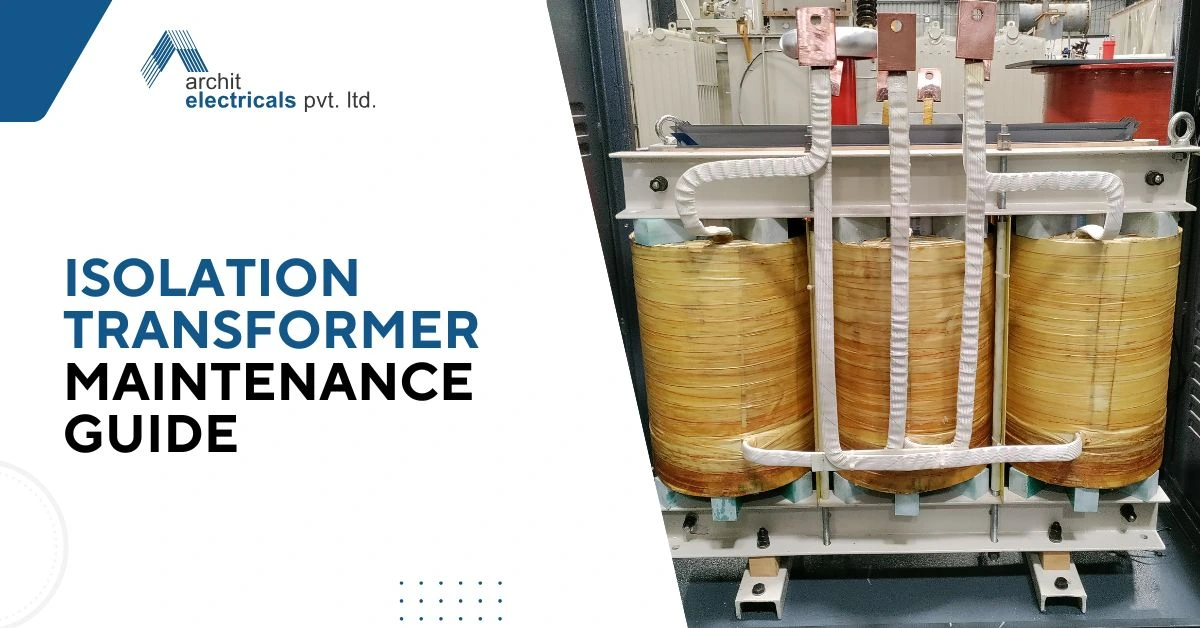
Industrial electrical systems depend on reliable power transfer, voltage stability, and equipment protection to maintain uninterrupted operations. An Isolation Transformer plays an important role in supporting these requirements by providing electrical separation between primary and secondary circuits while ensuring safe and dependable power transfer. These transformers are widely used in industrial power systems, automation setups, laboratories, communication equipment, and commercial installations where electrical stability is essential.
Although Isolation Transformers are designed for long operational life and dependable performance, they are continuously exposed to electrical loading, environmental conditions, and operational stress. Without proper servicing and planned inspection, transformer performance may gradually decline, affecting power quality, equipment safety, and operational reliability. This is why maintenance is an essential part of ensuring long-term Isolation Transformer performance.
Understanding maintenance practices, inspection requirements, and operating conditions helps industries improve transformer reliability and reduce unexpected failures.
Understanding Isolation Transformer
An Isolation Transformer is designed to provide electrical isolation between input and output circuits while maintaining reliable power transfer through electromagnetic induction. By electrically separating the primary and secondary circuits, an Isolation Transformer helps improve safety and reduce electrical disturbances that may affect connected equipment.
These transformers are commonly installed where dependable voltage supply and equipment protection are required.
Typical applications include:
- Industrial power systems
- Automation and control panels
- Laboratories and testing facilities
- Commercial buildings
- Communication equipment
- Industrial machinery
The working principle of isolation transformer systems is based on magnetic coupling between isolated windings. This arrangement allows power transfer without direct electrical connection, improving safety and helping reduce grounding and voltage-related problems.
Modern Isolation Transformers often include:
- Dry type air-cooled construction
- High insulation capability
- Reliable voltage regulation
- Efficient transformer cores
- Durable winding systems
These design features support dependable and stable electrical performance.
Why Isolation Transformer Maintenance Is Important
An Isolation Transformer operates continuously in environments where heat, electrical loading, contamination, and operating conditions may influence long-term performance. While these transformers are engineered for durability, maintenance remains essential for preserving electrical reliability and operational safety.
Ignoring maintenance may result in:
- Voltage instability
- Overheating
- Insulation deterioration
- Reduced efficiency
- Electrical disturbances
- Unexpected equipment failures
Routine maintenance helps industries:
- Maintain power stability
- Improve transformer reliability
- Protect connected systems
- Extend transformer lifespan
- Reduce maintenance costs
- Improve electrical safety
Industrial operations depending on continuous electrical performance often consider transformer maintenance an essential reliability practice rather than a reactive repair activity.
Common Factors Affecting Isolation Transformer Performance
Several operating conditions may influence the performance and efficiency of an Isolation Transformer over time.
Understanding these factors helps industries establish effective maintenance programs and reduce performance-related risks.
| Performance Factor | Potential Impact |
| Excessive Heat | Reduced insulation life |
| Dust and Contamination | Cooling and insulation problems |
| Loose Connections | Voltage instability |
| Moisture Exposure | Electrical deterioration |
| Overloading | Thermal stress |
| Poor Ventilation | Reduced efficiency |
Heat is one of the most significant factors affecting transformer health. Continuous high temperatures may gradually weaken insulation systems and affect electrical performance.
Contamination also affects operation. Dust and airborne particles may reduce cooling efficiency and increase maintenance requirements. Moisture exposure can damage insulation systems and reduce transformer reliability, especially in demanding industrial environments.
Isolation Transformer Inspection and Maintenance Practices
A structured maintenance program helps ensure that an Isolation Transformer continues operating safely and efficiently. Maintenance practices generally involve planned inspection, electrical verification, and operating condition assessment. Visual inspection is usually the first step.
Inspection typically includes:
- Enclosure condition
- Dust accumulation
- Corrosion or damage
- Ventilation openings
- Signs of overheating
A properly maintained Isolation Transformer should remain physically clean and structurally secure. Electrical connection inspection is equally important.
Maintenance teams should verify:
- Terminal tightness
- Cable integrity
- Secure electrical connections
- Absence of burn marks
Loose electrical connections may increase resistance and generate excessive heat, reducing reliability. Facilities using isolation transformer single phase systems for instrumentation or control applications should follow regular inspection schedules to maintain dependable performance.
Need reliable Isolation Transformer maintenance support for critical electrical systems? Contact us today for dependable transformer solutions and technical assistance.
Temperature Monitoring and Cooling Considerations
Temperature control is essential for maintaining reliable Isolation Transformer operation. Even though many systems use dry type air-cooled construction, heat management remains an important maintenance concern.
Excessive temperature may result from:
- Overloading
- Poor ventilation
- Dust accumulation
- Electrical imbalance
- Loose connections
Maintenance teams should monitor:
- Surface temperature
- Ventilation condition
- Heat concentration areas
- Cooling effectiveness
Consistent temperature control helps preserve insulation life and support long-term transformer performance.
Insulation Condition and Electrical Safety
Electrical insulation is one of the most important components affecting Isolation Transformer reliability. The transformer relies on insulation systems to maintain electrical separation and support safe power transfer.
Over time, insulation may deteriorate due to:
- Thermal stress
- Moisture exposure
- Aging
- Electrical loading
- Environmental contamination
Routine maintenance should evaluate:
- Insulation condition
- Leakage indicators
- Surface contamination
- Signs of electrical stress
The working principle of isolation transformer operation depends on maintaining proper electrical separation, making insulation inspection an important maintenance consideration.
Testing and Performance Evaluation
Routine testing helps verify that an Isolation Transformer continues performing according to operational requirements. Testing helps identify developing issues before they lead to unexpected failures.
Common maintenance testing may include:
- Voltage verification
- Continuity checks
- Insulation evaluation
- Connection testing
- Temperature assessment
Performance evaluation helps industries confirm:
- Stable power transfer
- Reliable isolation
- Voltage regulation
- Operational safety
A properly maintained transformer supports better system reliability and more predictable electrical performance.
Benefits of Proper Isolation Transformer Maintenance
Planned maintenance offers long-term operational and financial benefits for industries relying on dependable electrical systems. An Isolation Transformer receiving proper inspection and maintenance generally provides better reliability and longer service life.
Key maintenance benefits include:
- Improved power stability
- Better equipment protection
- Reduced downtime
- Lower repair expenses
- Longer transformer life
- Improved operational safety
- Reduced electrical disturbances
Industries evaluating isolation transformer price should consider maintenance and lifecycle reliability rather than focusing only on initial investment. Reliable maintenance often contributes to lower ownership cost and improved operational efficiency.
Role of Reliable Technical Support
Long-term transformer performance depends not only on equipment quality but also on maintenance expertise and technical support.
An experienced Isolation transformer supplier can support industries through:
- Technical guidance
- Maintenance recommendations
- Operating support
- Inspection planning
- Transformer servicing expertise
Professional support helps industries improve reliability and maintain stable electrical systems. Selecting dependable transformer solutions and maintaining proper servicing schedules contributes to long-term electrical performance and reduced operational risk.
Applications Where Maintenance Is Critical
Maintenance becomes especially important where an Isolation Transformer supports equipment requiring stable and dependable electrical supply.
Industries and systems commonly depending on proper maintenance include:
- Industrial automation
- Control panels
- Testing facilities
- Communication systems
- Commercial electrical installations
- Manufacturing equipment
In these environments, even small electrical disturbances may affect productivity or equipment reliability. Regular maintenance helps preserve transformer performance and maintain uninterrupted operations.
Frequently Asked Questions
An Isolation Transformer provides electrical separation between circuits while ensuring safe and reliable power transfer.
Isolation Transformer maintenance helps maintain power stability, improve safety, and extend transformer service life.
Heat, contamination, moisture, loose connections, and overloading may affect Isolation Transformer reliability.
Maintenance frequency depends on operating conditions and application requirements, but planned inspection schedules are recommended.
The working principle of isolation transformer systems is based on electromagnetic induction between isolated windings.
Conclusion
An Isolation Transformer is an essential component for maintaining electrical safety, voltage stability, and dependable power transfer across industrial and commercial systems. Proper maintenance helps preserve insulation performance, reduce operational risks, and support long-term transformer reliability. Through planned inspection, testing, and temperature monitoring, industries can improve equipment protection and minimize unexpected electrical problems. Consistent maintenance ultimately supports safer and more efficient electrical operations.
Isolation Transformer PriceIsolation Transformer Single PhaseIsolation Transformer SupplierWorking Principle of Isolation Transformer
Related Posts
Transformers are used in specialized industrial applications where reliable electrical power and stable voltage supply…
Transformers are essential electrical devices used to transfer electrical energy between circuits while changing voltage…