15, Jeevan Jyot Society, Opp.Indra Complex, Lalbaug Road, Vadodara-390011
 archit@architelectricals.com
 +91 265-2655380

Transformers are essential for industrial power distribution, and their reliable operation depends on more than…
- Product Guide
- 8 minute read
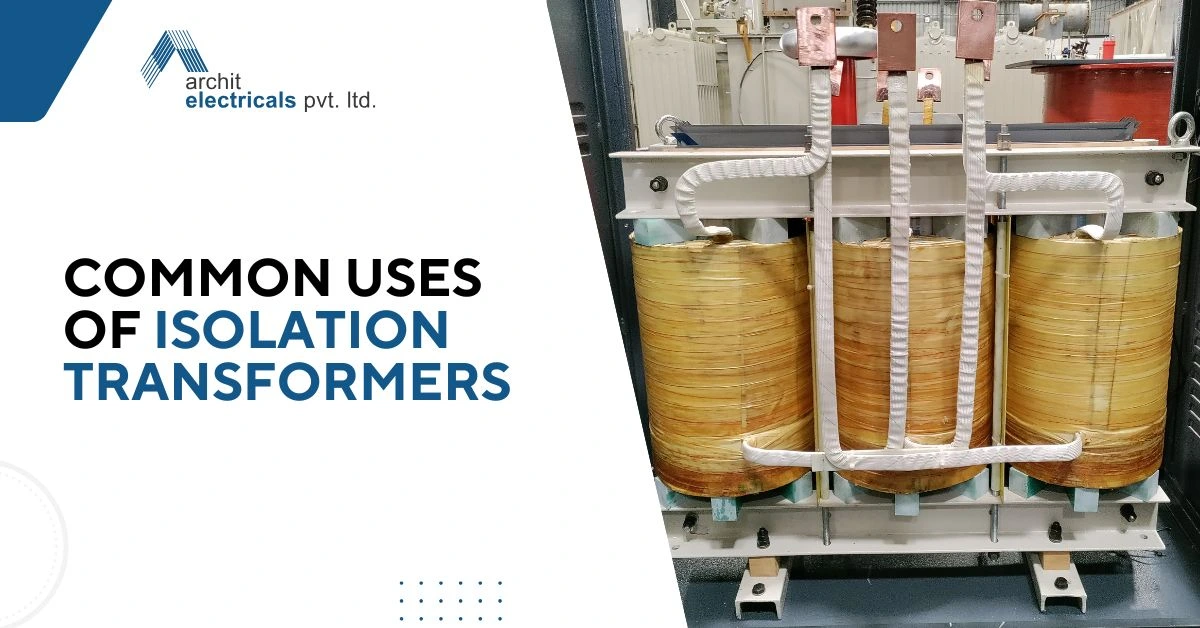
Electrical safety, voltage stability, and equipment protection are critical requirements in modern industrial and commercial power systems. As industries increasingly rely on sensitive machinery, automation systems, electronic equipment, and precision instruments, maintaining reliable power quality becomes more important than ever. This is where an Isolation Transformer plays a vital role.
An Isolation Transformer is designed to provide electrical separation between the primary and secondary circuits while ensuring safe and efficient power transfer. By creating this separation, it helps protect equipment from electrical disturbances, grounding issues, voltage fluctuations, and unwanted interference. As a result, Isolation Transformers have become an essential component in numerous industrial, commercial, and specialized applications.
Understanding the common uses of Isolation Transformers helps industries select the right power protection solution while improving equipment reliability and operational efficiency.
Understanding the Role of an Isolation Transformer
An Isolation Transformer is primarily used to transfer electrical power while maintaining complete electrical separation between the input and output circuits. This separation helps reduce electrical noise, minimize grounding problems, and improve operational safety.
Unlike conventional transformers that focus mainly on voltage transformation, an Isolation Transformer provides an additional layer of protection by isolating connected equipment from power disturbances that may originate from the electrical supply system.
Because of these capabilities, Isolation Transformers are widely installed in environments where equipment protection, stable power delivery, and electrical safety are essential. Industries often rely on Isolation Transformers to improve power quality and maintain reliable electrical performance in demanding operating conditions.
Isolation Transformer Applications in Industrial Power Distribution
One of the most common Isolation Transformer applications is industrial power distribution. Manufacturing facilities, processing plants, engineering units, and production environments require stable electrical power to support continuous operations.
Industrial equipment is often exposed to:
- Voltage fluctuations
- Electrical noise
- Ground loop issues
- Power disturbances
- Load variations
An Isolation Transformer helps reduce the impact of these problems by creating electrical separation between the power source and connected equipment.
This application is particularly important in facilities where electrical disturbances can affect productivity, equipment performance, or operational safety. By improving power quality and reducing electrical interference, Isolation Transformers support more reliable industrial operations.
Use of Isolation Transformers in Control Panels and Automation Systems
Automation systems depend on accurate electrical signals and stable voltage conditions to function efficiently. Control panels, programmable logic controllers (PLCs), industrial drives, and automated machinery often require protection from electrical disturbances that may affect performance.
An Isolation Transformer is frequently installed in automation systems to provide cleaner and more stable power to sensitive control equipment.
Benefits in automation applications include:
- Improved signal stability
- Reduced electrical interference
- Better equipment protection
- Enhanced operational reliability
- Reduced risk of control system malfunction
As industrial automation continues to expand across manufacturing sectors, the demand for reliable Isolation Transformer solutions continues to grow.
Isolation Transformer Applications in Laboratories and Testing Facilities
Laboratories and testing facilities require precise electrical conditions to ensure accurate measurements and dependable equipment performance. Even minor electrical disturbances can affect testing accuracy and lead to unreliable results.
An Isolation Transformer helps maintain stable electrical conditions by reducing interference and isolating sensitive equipment from external electrical disturbances.
Common laboratory applications include:
- Research facilities
- Calibration laboratories
- Product testing environments
- Quality control departments
- Measurement and instrumentation systems
Because these environments rely heavily on accuracy and consistency, Isolation Transformers play an important role in supporting dependable testing operations.
Use of Isolation Transformers in Communication and Electronic Systems
Communication systems and electronic equipment are particularly sensitive to electrical noise and voltage instability. Power disturbances may affect signal quality, system performance, and equipment reliability.
An Isolation Transformer is widely used in communication infrastructure to improve power quality and protect electronic equipment from electrical disturbances.
Typical applications include:
- Communication networks
- Broadcasting systems
- Data transmission equipment
- Monitoring systems
- Electronic control systems
Electrical isolation helps ensure that sensitive communication equipment operates efficiently while minimizing the impact of interference and grounding issues.
Isolation Transformer Applications in Commercial Buildings
Commercial buildings often contain a variety of electrical systems that require reliable and stable power distribution. Office complexes, shopping centers, hospitals, educational institutions, and public facilities depend on electrical infrastructure that supports uninterrupted operation.
An Isolation Transformer is commonly used in commercial installations to improve safety and protect electrical equipment from power-related issues.
Benefits in commercial environments include:
- Improved electrical safety
- Stable voltage supply
- Equipment protection
- Reduced electrical disturbances
- Better operational reliability
As commercial facilities continue to adopt advanced electronic systems and automation technologies, Isolation Transformers remain an important part of modern building infrastructure.
Use of Isolation Transformers in Sensitive Equipment Protection
Sensitive electrical equipment often requires a higher level of protection than standard power systems can provide. Equipment used in precision applications may be vulnerable to voltage fluctuations, electrical noise, and grounding problems.
An Isolation Transformer helps protect sensitive equipment by providing electrical separation and improving power quality.
Common examples include:
- Precision instruments
- Monitoring devices
- Electronic measurement systems
- Medical support equipment
- Specialized industrial electronics
Protecting sensitive equipment not only improves reliability but also helps reduce maintenance costs and equipment downtime.
Need reliable Isolation Transformer solutions for industrial power systems? Contact us today for dependable transformer solutions and technical support.
Isolation Transformer Applications in Industrial Machinery
Industrial machinery represents a significant investment for manufacturing and processing facilities. Unexpected electrical disturbances can lead to equipment damage, production losses, and costly repairs.
An Isolation Transformer is often installed to support machinery protection and improve operating reliability.
Applications include:
- Manufacturing machines
- CNC equipment
- Processing systems
- Material handling equipment
- Packaging machinery
Stable power delivery helps machinery operate efficiently while reducing the likelihood of electrical-related failures.
Use of Isolation Transformers in Renewable Energy Systems
Renewable energy installations continue to grow across industrial and commercial sectors. Solar energy systems, wind power projects, and other renewable energy applications often require dependable electrical protection and power management solutions.
An Isolation Transformer supports these systems by helping maintain safe and stable power transfer between different electrical circuits.
Advantages in renewable energy applications include:
- Improved electrical safety
- Better equipment protection
- Stable power distribution
- Reduced interference
- Enhanced system reliability
As renewable energy infrastructure expands, Isolation Transformers continue to support efficient power integration and reliable system operation.
Isolation Transformer Advantages Across Industries
The widespread use of Isolation Transformers is driven by the numerous benefits they provide across different industries and applications.
Some important Isolation Transformer advantages include:
| Advantage | Benefit |
| Electrical Isolation | Improved safety and equipment protection |
| Voltage Stability | More reliable power delivery |
| Noise Reduction | Reduced electrical interference |
| Equipment Protection | Lower risk of electrical damage |
| Improved Reliability | Better system performance |
| Operational Safety | Reduced electrical hazards |
These benefits make Isolation Transformers suitable for a wide range of industrial, commercial, and specialized applications. The ability to improve power quality while protecting equipment remains one of the primary reasons industries invest in Isolation Transformer solutions.
Importance of Choosing the Right Isolation Transformer Solution
Selecting the appropriate Isolation Transformer depends on several factors, including application requirements, power quality concerns, equipment sensitivity, and operating environment.
Industries should evaluate:
- Power system requirements
- Equipment protection needs
- Installation environment
- Load characteristics
- Long-term operational goals
Working with an experienced Isolation Transformer manufacturer can help ensure that transformer solutions are properly matched to operational requirements. Proper transformer selection contributes to improved performance, longer equipment life, and dependable electrical operation.
Frequently Asked Questions
An Isolation Transformer is used to provide electrical separation between circuits while improving safety, power quality, and equipment protection.
Common Isolation Transformer applications include industrial power distribution, automation systems, laboratories, communication equipment, commercial buildings, and industrial machinery.
An Isolation Transformer helps reduce electrical disturbances, grounding issues, and voltage-related problems that may affect connected equipment.
Major Isolation Transformer advantages include improved electrical safety, voltage stability, equipment protection, noise reduction, and operational reliability.
Isolation Transformers provide stable power and help protect sensitive automation equipment from electrical interference and disturbances.
Conclusion
An Isolation Transformer is an essential component in modern electrical systems where safety, reliability, and equipment protection are critical. From industrial power distribution and automation systems to laboratories, communication networks, commercial buildings, and renewable energy installations, Isolation Transformers support a wide range of applications. Their ability to improve power quality, reduce electrical disturbances, and protect valuable equipment makes them a dependable solution for industries seeking stable and efficient electrical performance. As power systems continue to become more advanced, the importance of Isolation Transformer applications across industries will continue to grow.
Related Posts
Choosing the right transformer for an industrial application requires a clear understanding of its electrical…
Transformers are essential for reliable power distribution and industrial electrical systems. However, continuous operation can…