15, Jeevan Jyot Society, Opp.Indra Complex, Lalbaug Road, Vadodara-390011
 archit@architelectricals.com
 +91 265-2655380

Industrial processes that require a stable direct current (DC) supply often depend on rectifier systems…
- Product Guide
- 7 minute read
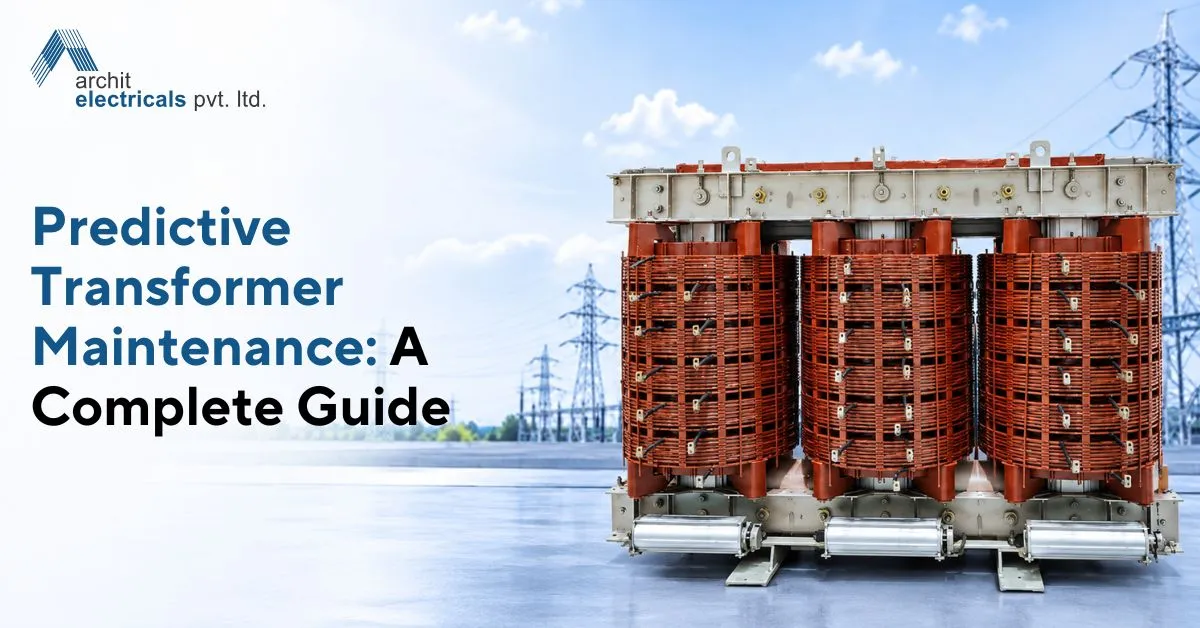
Transformers are essential for industrial power distribution, and unexpected failures can interrupt production, damage equipment, and increase maintenance costs. Predictive Transformer Maintenance helps industries identify potential problems by analysing equipment condition, diagnostic test results, and operating trends before faults lead to major breakdowns.
Unlike maintenance performed only at fixed intervals, predictive maintenance uses condition-related information to guide maintenance decisions. This allows teams to prioritise critical equipment, plan interventions, and improve transformer reliability.
What Is Predictive Transformer Maintenance?
A Predictive Transformer Maintenance is a condition-based approach that uses monitoring systems and diagnostic techniques to evaluate transformer health. It helps identify developing issues such as overheating, insulation deterioration, abnormal operating conditions, and potential internal faults.
The objective is to detect warning signs early and take appropriate action before a developing problem causes an unexpected shutdown. The methods used depend on transformer design, operating conditions, and the importance of the equipment to the facility.
How Does Predictive Transformer Maintenance Work?
A Predictive Transformer Maintenance programme generally follows five steps:
- Establish baseline conditions: Record normal operating temperatures, loading levels, and relevant diagnostic results.
- Monitor transformer performance: Collect information through inspections, sensors, and periodic testing.
- Identify abnormal trends: Compare current readings with historical data, established limits, and manufacturer recommendations.
- Investigate potential faults: Use suitable diagnostic tests to determine the likely cause of unusual readings.
- Plan corrective action: Schedule inspections, repairs, or further testing according to the severity of the identified risk.
This process helps maintenance teams make informed decisions rather than relying exclusively on fixed service intervals.
Key Techniques Used in Predictive Transformer Maintenance
1. Dissolved Gas Analysis (DGA)
For oil-filled transformers, dissolved gas analysis examines gases present in the insulating oil. Certain gas patterns can indicate developing problems associated with overheating, electrical discharges, or other internal faults. As part of Predictive Transformer Maintenance, DGA results should be evaluated alongside operating history and other diagnostic findings.
2. Transformer Oil Testing
Oil testing can assess moisture content, dielectric strength, and other properties related to insulation performance. Changes in oil condition may indicate contamination, ageing, or the need for further investigation.
3. Thermal Monitoring
Temperature sensors and infrared thermography help identify abnormal heating in accessible components, connections, and cooling equipment. Within Predictive Transformer Maintenance, investigating unusual temperature patterns can help detect potential problems before excessive heat causes further damage.
4. Electrical Diagnostic Testing
Tests such as insulation resistance and winding resistance measurements can help assess insulation condition and identify certain electrical or connection-related problems. The appropriate tests depend on the transformer type and the suspected fault.
5. Online Condition Monitoring
Monitoring systems can track parameters such as temperature, load, and selected electrical or oil-related indicators. Analysing these measurements over time helps identify deviations from normal operating patterns. This continuous or periodic data analysis strengthens Predictive Transformer Maintenance by supporting timely investigation and informed maintenance decisions.
Predictive vs. Preventive vs. Reactive Transformer Maintenance
| Maintenance type | How it works | Main purpose |
|---|---|---|
| Predictive | Uses condition data and trends to guide intervention | Detect developing problems early |
| Preventive | Follows planned maintenance schedules | Reduce the likelihood of equipment deterioration |
| Reactive | Repairs equipment after a fault or failure occurs | Restore operation after a problem |
These approaches can complement one another. Predictive monitoring does not eliminate the need for routine inspections, scheduled servicing, or emergency repair procedures.
Benefits of Predictive Transformer Maintenance
A well-planned Predictive Transformer Maintenance programme can offer several benefits:
- Reduced unplanned downtime: Early warning signs can be investigated before they cause major interruptions.
- Improved reliability: Condition assessment helps maintenance teams identify potential faults.
- Better maintenance planning: Repairs and inspections can be prioritised according to equipment condition.
- More informed spending: Testing results can help avoid unnecessary interventions while identifying issues that need attention.
- Potentially longer service life: Timely corrective action may limit further damage to transformer components.
Actual results depend on monitoring methods, data quality, operating conditions, and the effectiveness of maintenance decisions.
Looking to improve transformer reliability? Contact us to discuss your maintenance requirements.
How to Implement a Predictive Maintenance Programme?
Industries can begin by identifying transformers whose failure would significantly affect safety, production, or power availability. These assets should be assessed to determine suitable monitoring methods and testing frequency.
Next, establish baseline readings and maintain accurate records of inspections, operating conditions, alarms, and diagnostic results. Define thresholds for investigation and ensure that abnormal findings are reviewed by qualified personnel.
Finally, use the collected data to prioritise maintenance actions and regularly evaluate the programme’s effectiveness. An effective Predictive Transformer Maintenance strategy should be tailored to each transformer’s criticality, condition, and operating environment rather than applying the same monitoring approach to every asset.
Common Warning Signs of Transformer Problems
Identifying early warning signs is an important part of Predictive Transformer Maintenance, as unusual operating conditions may indicate developing equipment problems. Potential warning signs include unexpected temperature increases, oil leaks, abnormal sounds, repeated protection alarms, deteriorating oil test results, and changes in normal operating behaviour.
These symptoms do not always confirm a specific fault, but they should be investigated using appropriate diagnostic methods. Effective Predictive Transformer Maintenance combines condition monitoring with historical performance data and qualified technical assessment to help determine whether further testing or corrective action is required
Monitoring must always be supported by established safety procedures and appropriate inspections, as sudden failures can still occur even when a predictive maintenance programme is in place.
Challenges and Limitations
A Predictive maintenance requires suitable diagnostic methods, reliable data, trained personnel, and clear procedures for responding to abnormal results. Online monitoring equipment can also involve installation and ongoing costs.
Not every transformer needs continuous monitoring. The most appropriate strategy depends on equipment criticality, operating conditions, potential failure consequences, and the value of the information collected.
Frequently Asked Questions
It is a condition-based approach that uses monitoring data and diagnostic testing to identify potential transformer problems before they develop into major failures.
Common methods include dissolved gas analysis, oil quality testing, thermal monitoring, insulation resistance testing, winding resistance testing, and online condition monitoring.
The frequency depends on transformer type, operating conditions, criticality, condition, and manufacturer recommendations. Some assets may need continuous monitoring, while others may be assessed through periodic testing.
No. It can help identify many developing problems, but sudden failures and undetected defects can still occur. Routine inspections and appropriate protection systems remain necessary.
Neither approach is universally better. Predictive maintenance uses equipment condition to guide decisions, while preventive maintenance follows planned schedules. Combining both approaches can provide an effective maintenance strategy.
Conclusion
A Predictive Transformer Maintenance helps industries use condition data, diagnostic testing, and performance trends to identify developing problems and plan timely interventions. By selecting suitable monitoring methods and responding appropriately to abnormal findings, maintenance teams can improve reliability and reduce the risk of unexpected downtime. A programme based on transformer criticality and operating conditions can complement routine servicing and support more informed maintenance decisions.
Transformer Condition MonitoringTransformer Health MonitoringTransformer InspectionTransformer Predictive MaintenanceTransformer Testing
Related Posts

A Scott-T Transformer is a specialized transformer arrangement used to convert three-phase electrical power into…
Transformers are essential for industrial power distribution, and their reliable operation depends on more than…