15, Jeevan Jyot Society, Opp.Indra Complex, Lalbaug Road, Vadodara-390011
 archit@architelectricals.com
 +91 265-2655380

Transformers are critical components of industrial electrical systems, and a fault can affect equipment, production,…
- Product Tips
- 6 minute read
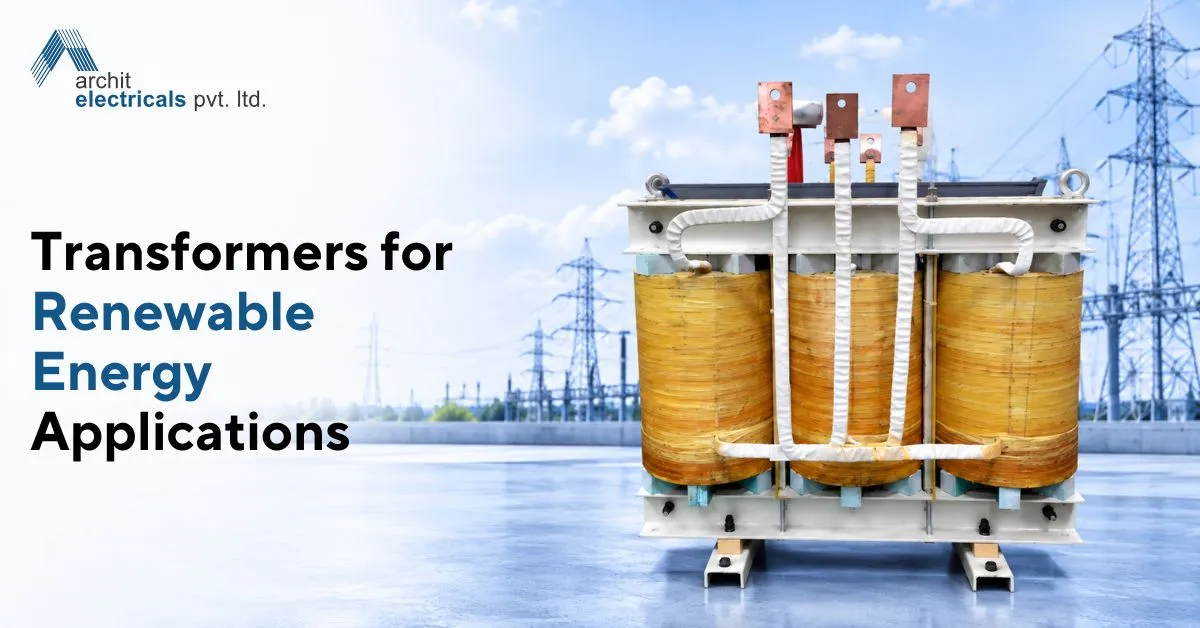
Solar and wind energy systems require reliable electrical equipment to transfer generated power and connect it with distribution networks. Voltage levels, operating conditions, and electrical compatibility all influence how electricity moves from generation equipment to the wider power system. Renewable Energy Transformers play an important role in this process by helping adjust voltage levels and support efficient power transfer according to installation requirements.
Selecting suitable equipment requires an understanding of the renewable energy system, its electrical configuration, and the conditions under which it operates.
Why Are Transformers Important in Renewable Energy Systems?
Renewable energy installations use power conversion and electrical distribution equipment to deliver electricity in a form suitable for connected systems. Transformers help manage voltage differences between generation equipment, collection networks, and distribution infrastructure.
The correct transformer configuration depends on system capacity, voltage requirements, operating environment, and grid connection specifications. Proper selection of Renewable Energy Transformers helps ensure electrical compatibility and supports dependable operation throughout the installation.
Applications of Transformers in Renewable Energy
1. Solar Power Systems
Solar installations generate electricity through photovoltaic panels and use power-conversion equipment to make that electricity suitable for the connected electrical system. Renewable Energy Transformers can help adjust voltage between inverter outputs and collection or distribution networks, depending on the installation design.
Transformer selection should account for the system’s voltage, power capacity, installation conditions, and equipment requirements.
2. Wind Energy Systems
Wind turbines generate electricity under changing wind conditions. The generated power passes through electrical equipment before being transferred to a collection network or distribution system.
Suitable transformer arrangements help match voltage levels across these connections. The required design depends on the turbine system, electrical ratings, grid connection requirements, and operating environment.
3. Renewable Energy Distribution Networks
Solar farms and wind installations may need to connect with local distribution infrastructure or larger electrical networks. Renewable Energy Transformers help provide the required voltage transformation at appropriate points in the system.
For these installations, engineers must consider voltage ratings, load requirements, protection arrangements, and applicable electrical standards when selecting equipment.
Looking for transformer solutions for renewable energy applications? Contact us to discuss your electrical requirements.
Types of Transformer Solutions for Renewable Energy Applications
Different renewable energy installations require different electrical components. The following product types may be relevant depending on the system design and application requirements.
Oil Cooled Transformers
Renewable energy installations may require effective insulation and heat dissipation to support reliable electrical operation. Oil cooled transformers use insulating oil for these purposes, with their suitability depending on the required voltage, power capacity, cooling design, and operating conditions of the installation.
Isolation Transformers
Renewable energy installations may require electrical separation to support the requirements of connected equipment. Isolation Transformers provide separation between circuits while transferring power, helping meet specific electrical isolation needs. Their suitability depends on the system design, equipment specifications, and operating conditions.
Ultra Isolation Transformers
Renewable energy systems may require enhanced electrical separation to meet the needs of sensitive connected equipment. Ultra Isolation Transformers are designed for applications requiring a higher level of electrical isolation, with their suitability depending on the system design, equipment specifications, and operating conditions.
Industrial Chokes
Renewable energy systems may use inductive components to support the operation of electrical and power-electronic circuits. Industrial Chokes can help manage current variations, depending on the circuit design and application requirements. Unlike transformers, they perform an inductive function and should be selected according to the equipment specifications and operating conditions.
AC-DC Power Sources
Renewable energy installations may require DC power for auxiliary equipment and specialised electrical applications. AC-DC Power Sources convert alternating current into direct current, supporting equipment that requires a DC supply. Their suitability for solar or wind projects depends on the electrical design, power requirements, and equipment specifications. These products serve a different function from transformers, so each component should be selected according to its intended application and operating conditions.
How to Choose Renewable Energy Transformers?
Before selecting Renewable Energy Transformers, project developers and electrical engineers should evaluate several factors:
- Voltage ratings: Confirm the required input and output voltage levels.
- Power capacity: Match the equipment to the installation’s expected electrical demand or generation capacity.
- System compatibility: Check compatibility with inverters, protection equipment, and the wider electrical network.
- Operating environment: Consider ambient temperature, installation location, and exposure to environmental conditions.
- Cooling requirements: Select a suitable arrangement based on transformer design and operating conditions.
- Maintenance needs: Consider inspection access, servicing requirements, and long-term operating conditions.
A qualified electrical engineer should verify the final selection against project specifications, applicable standards, and grid connection requirements.
Frequently Asked Questions
These are transformers selected for renewable energy installations to support voltage transformation and power transfer between connected electrical systems.
Depending on the system design, transformers adjust voltage between inverter outputs, collection systems, and distribution networks.
They help transfer electricity generated by wind turbines at the voltage required by the installation’s collection or distribution system.
Key factors include voltage, power capacity, cooling requirements, operating environment, equipment compatibility, and grid connection specifications.
They may be suitable when electrical separation is required by the system design or connected equipment. Their suitability should be confirmed by a qualified electrical engineer.
Conclusion
Transformers play an important role in solar and wind installations by managing voltage levels and supporting electricity transfer between connected systems. Selecting suitable equipment involves evaluating electrical ratings, cooling requirements, operating conditions, and system compatibility. Properly selected Renewable Energy Transformers help support reliable power transfer and dependable renewable energy infrastructure.
Custom Transformer ManufacturerEnergy Efficient TransformerPower Distribution TransformerSolar Power TransformerWind Power Transformer
Related Posts
Selecting the right transformer is important for maintaining stable, safe, and efficient electrical operations in…
In refinery and oil & gas industries, maintaining reliable electrical systems is essential for continuous…