15, Jeevan Jyot Society, Opp.Indra Complex, Lalbaug Road, Vadodara-390011
 archit@architelectricals.com
 +91 265-2655380

Transformers are critical components of industrial electrical systems, and a fault can affect equipment, production,…
- Product Tips
- 5 minute read
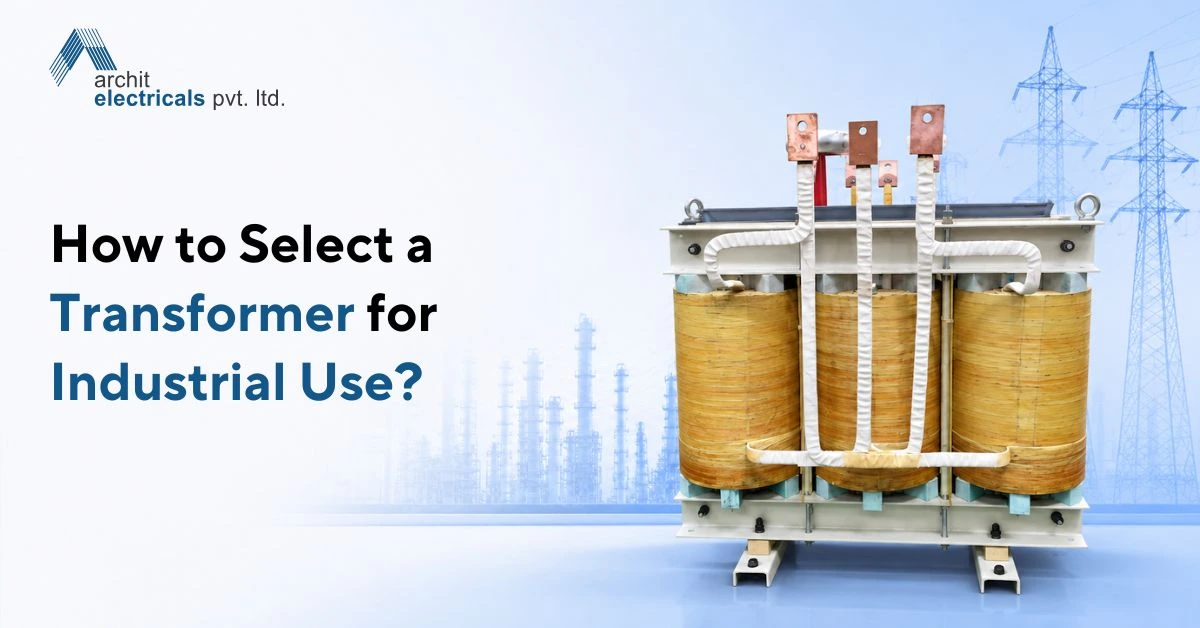
Selecting the right transformer is important for maintaining stable, safe, and efficient electrical operations in industrial facilities. Different applications require different voltage levels, capacities, cooling methods, and transformer configurations. Therefore, choosing a Transformer for Industrial Use should begin with understanding the electrical load, application, operating environment, and required performance rather than selecting a transformer based on capacity alone.
Understand the Industrial Application
The first step is to identify what the transformer will power and how it will operate. Industrial requirements can vary significantly between manufacturing plants, refineries, welding systems, renewable energy installations, and power distribution networks.
For example, oil and gas processing may require specialized solutions such as a Heater Treater Transformer or Desalter Transformer, while high-frequency welding applications can require a water-cooled high-frequency transformer. Understanding the application helps determine the appropriate transformer design.
Determine Voltage and Power Requirements
Voltage and power requirements are among the most important factors when selecting an Industrial Transformer. The input and output voltage should match the electrical system, while the transformer capacity should be suitable for the connected load.
Before selecting a transformer, consider:
- Required input and output voltage
- Connected electrical load
- Required transformer capacity
- Operating conditions
- Future load requirements
- Voltage regulation requirements
For specialized applications, available specifications can differ considerably. For example, the Desalter Transformer range includes output voltages from 12 kV to 25 kV, while the Oil Cooled Transformer information covers power ratings up to 5 MVA.
Choose the Appropriate Cooling Type
Cooling requirements depend on the transformer design, capacity, installation environment, and application. Selecting the correct cooling arrangement helps manage heat generated during continuous operation. Dry Type Transformers are designed for indoor applications without oil and offer reduced fire hazards and lower maintenance requirements. Oil Cooled Transformers, on the other hand, use oil for cooling and insulation and are suitable for various industrial and specialized applications.
For high-frequency welding systems, a Water Cooled High Frequency Transformer provides efficient heat dissipation under heavy loads.
Consider the Operating Environment
The installation environment should also influence transformer selection. Industrial equipment may operate under demanding conditions where reliable insulation, robust construction, safety, and continuous operation are important.
For applications involving hazardous industrial environments, the transformer should be selected according to the specific project requirements and applicable safety considerations. A Transformer for Industrial Use may also require a custom configuration based on operating conditions and customer specifications.
Need help choosing a Transformer for Industrial Use? Contact us today for reliable transformer solutions.
Evaluate Application-Specific Transformer Designs
Not every industrial requirement can be addressed with a standard transformer. Specialized equipment can provide a better fit for particular processes. An Industrial Transformer can be selected according to the electrical and operational requirements of the intended application. Some industrial transformer options include:
- Desalter Transformer – Designed for crude oil desalting systems
- Heater Treater Transformer – Used with heater treater units in crude oil processing
- Rectifier Transformer – Used for industrial AC-to-DC rectification systems
- Isolation Transformer – Provides electrical isolation between primary and secondary circuits
- Ultra Isolation Transformer – Designed for sensitive equipment requiring clean, isolated power
- Scott-T Transformer – Used for three-phase to two-phase conversion
- Oil Cooled Transformer – Suitable for industrial power and specialized applications
- Dry Type Transformer – Designed for indoor electrical distribution and other applications
Consider Efficiency, Safety and Maintenance
Beyond initial specifications, consider electrical efficiency, insulation, heat management, safety, installation requirements, and expected maintenance. A suitable Industrial Transformer should provide dependable performance without creating unnecessary operational or maintenance challenges.
The Industrial Transformer Price should also be evaluated against the transformer’s specifications, application requirements, configuration, and long-term operating needs rather than considering purchase cost alone.
Frequently Asked Questions
The appropriate transformer depends on the application. Industries may use dry type, oil cooled, isolation, rectifier, desalter, heater treater, and other specialized transformers.
Capacity should be selected according to the connected electrical load, operating requirements, voltage specifications, and expected future requirements.
Cooling helps manage heat generated during operation. The appropriate cooling method depends on transformer design, application, installation, and operating conditions.
Specifications, capacity, voltage requirements, cooling type, configuration, and application-specific customization can influence the overall price.
Yes. Certain transformer designs can be tailor-made according to customer requirements and project specifications.
Conclusion
Choosing a Transformer for Industrial Use requires careful evaluation of application, voltage, capacity, cooling, insulation, environment, and long-term operating requirements. The right choice should reflect the actual demands of the industrial process rather than relying on capacity or price alone. A properly matched transformer can support dependable electrical performance, equipment protection, and efficient operation over the long term.
How to Use a TransformerIndustrial Transformer PriceIndustrial TransformersWhich Transformer is Used in Industry
Related Posts
In refinery and oil & gas industries, maintaining reliable electrical systems is essential for continuous…