15, Jeevan Jyot Society, Opp.Indra Complex, Lalbaug Road, Vadodara-390011
 archit@architelectricals.com
 +91 265-2655380

Selecting the right transformer is important for maintaining stable, safe, and efficient electrical operations in…
- Product Tips
- 7 minute read
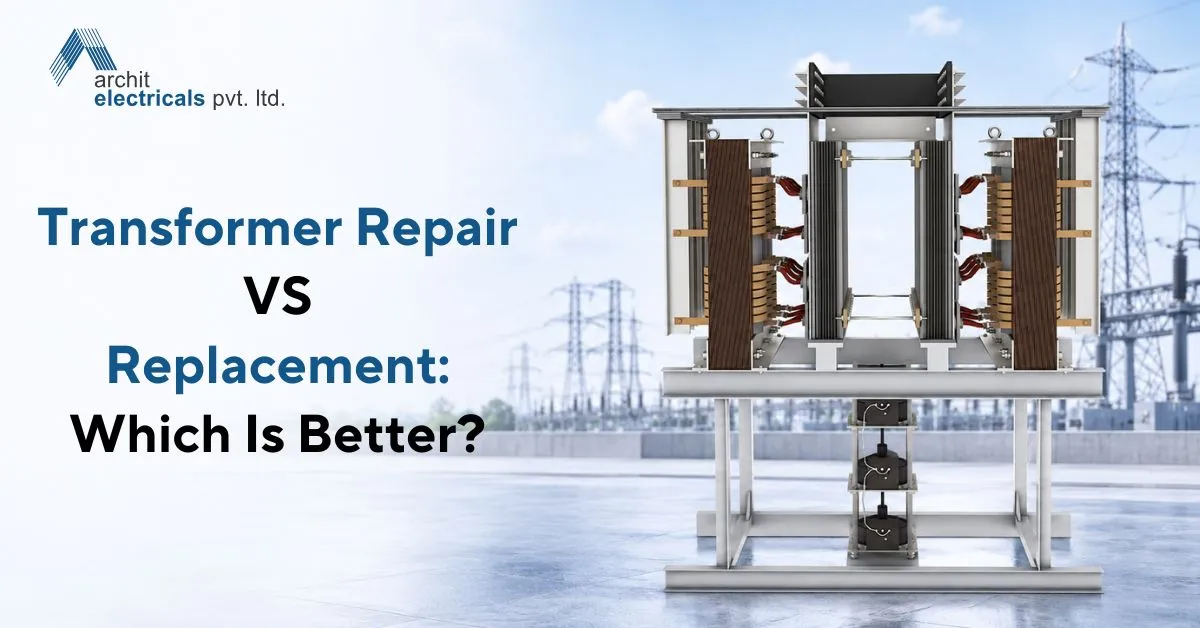
Transformers are critical components of industrial electrical systems, and a fault can affect equipment, production, and overall power reliability. When a transformer develops a problem, industries generally need to evaluate whether restoring the existing unit or replacing it is more suitable. The decision should not be based on cost alone. Transformer condition, damage level, operating requirements, downtime, and future electrical needs all play an important role. In this situation, Transformer Repairing can provide a practical way to restore equipment when complete replacement is not feasible.
When Should a Transformer Be Repaired?
Repair is generally considered when the transformer has a specific fault that can be identified and corrected. Problems such as damaged components, insulation issues, overheating, or electrical faults may affect performance without necessarily making the entire transformer unsuitable for continued operation.
A detailed inspection is important before starting any work. It helps determine the condition of the equipment and the extent of damage. Based on the findings, appropriate corrective work can be planned to restore dependable operation and improve the service condition of the transformer.
In industrial environments, Transformer Repairing can also be relevant when the existing transformer is a critical-size unit and replacing the complete equipment is difficult or impractical.
When Is Transformer Replacement More Suitable?
Transformer replacement may be considered when the existing equipment is no longer suitable for its intended application or cannot be practically restored. Extensive damage, changing electrical requirements, or the inability of the existing transformer to provide the required performance can influence this decision.
A replacement transformer must be selected according to the actual electrical system. Voltage, capacity, cooling arrangement, installation conditions, and application requirements should all be evaluated.
The Transformer Replacement Cost should therefore be considered as part of the complete project rather than as the only deciding factor. Procurement, installation, system compatibility, downtime, and the specifications of the new transformer can all influence the total investment.
Repair vs Replacement: What Factors Matter?
| Factor | Repair | Replacement |
| Transformer condition | Suitable when the equipment can be restored | Considered when existing condition is unsuitable |
| Extent of damage | Appropriate for repairable faults | May be required for extensive damage |
| Existing design | Can retain the current transformer configuration | Allows a new configuration if requirements have changed |
| Downtime | Depends on the nature of repair work | Includes procurement and installation time |
| Cost | Depends on inspection and repair requirements | Includes equipment, installation, and associated costs |
| Operational requirements | Useful when existing specifications remain suitable | Useful when new performance requirements must be met |
There is no universal answer because each transformer has different operating and service conditions.
What Does Professional Transformer Repairing Involve?
Professional Transformer Repairing begins with inspection and identification of the problem. The condition of the transformer and affected components is evaluated before determining the required service work.
Depending on the equipment condition, repair work may focus on restoring damaged components, addressing insulation-related issues, improving operational reliability, and returning the transformer to suitable working condition.
Professional Transformer Repair Services are particularly important for industrial equipment because transformer performance directly affects the reliability of connected electrical systems. Proper servicing can also help extend the useful service life of an existing transformer when restoration is technically practical.
Need professional transformer repair or servicing? Contact us to discuss your transformer requirements.
What About Transformer Replacement Parts?
The requirement for Transformer Replacement Parts depends on the specific equipment and the nature of the fault. Replacement components should be selected according to the transformer’s design and technical requirements rather than using unsuitable standard components.
A detailed assessment helps identify which components require attention and whether repairing the existing equipment remains practical.
How Should Industries Make the Decision?
The most suitable approach is to begin with a technical assessment rather than immediately choosing repair or replacement. The transformer’s operating history, present condition, electrical performance, application, and required future performance should all be considered.
If the existing transformer can be reliably restored and remains suitable for the application, repair can be evaluated. If its condition or specifications no longer support the required operation, replacement may be considered.
This approach also helps industries compare the feasibility of Transformer Repair Services with the Transformer Replacement Cost and determine which option better suits the equipment’s condition and operational requirements.
Why Proper Assessment Is Important?
Choosing between repair and replacement should begin with a technical evaluation rather than cost alone. The transformer’s application, operating history, physical condition, electrical performance, and service requirements all provide useful information for the decision.
Professional Transformer Repairing involves careful inspection and restoration according to the condition of the equipment. The objective is to bring the transformer back to reliable working condition while maintaining appropriate electrical and safety requirements.
For critical industrial systems, timely assessment can also help avoid unnecessary equipment replacement and support better planning for maintenance and future electrical requirements.
Repair or Replace: A Practical Approach
A useful approach is to first identify the exact problem, evaluate the transformer’s current condition, and determine whether the existing unit can satisfy the required operating conditions after corrective work. If restoration is technically practical, Transformer Repairing can be considered to restore the equipment and extend its service life. If the transformer no longer suits the application or cannot be reliably restored, replacement can be evaluated.
This approach allows industries to compare Transformer Repair Services with replacement requirements and make the decision based on technical suitability, equipment condition, and long-term operational needs rather than simply choosing the lowest immediate cost.
Frequently Asked Questions
Not necessarily. The appropriate option depends on transformer condition, extent of damage, operating requirements, repair feasibility, and overall project considerations.
Replacement may be considered when the existing transformer is unsuitable for the application, extensively damaged, or unable to meet required operating conditions.
It involves inspection and corrective work based on the identified condition and requirements of the transformer, with the goal of restoring reliable operation.
No. Capacity, voltage, cooling arrangement, configuration, installation, and other project requirements can contribute to the overall cost.
Inspection helps identify the actual condition and extent of the problem, allowing industries to evaluate whether repair or replacement is appropriate.
Conclusion
The choice between repair and replacement depends on the transformer’s actual condition and the requirements of the electrical system. Transformer Repairing can be considered when the existing equipment can be effectively restored, while replacement may be evaluated when the transformer is no longer suitable or practical to restore. A proper technical assessment provides the foundation for making an informed decision.
Repair of TransformerTransformer Repair and MaintenanceTransformer Repair ServicesTransformer Replacement CostTransformer Replacement Parts
Related Posts
In refinery and oil & gas industries, maintaining reliable electrical systems is essential for continuous…