15, Jeevan Jyot Society, Opp.Indra Complex, Lalbaug Road, Vadodara-390011
 archit@architelectricals.com
 +91 265-2655380

A Scott-T Transformer is a specialized transformer arrangement used to convert three-phase electrical power into…
- Product Guide
- 5 minute read
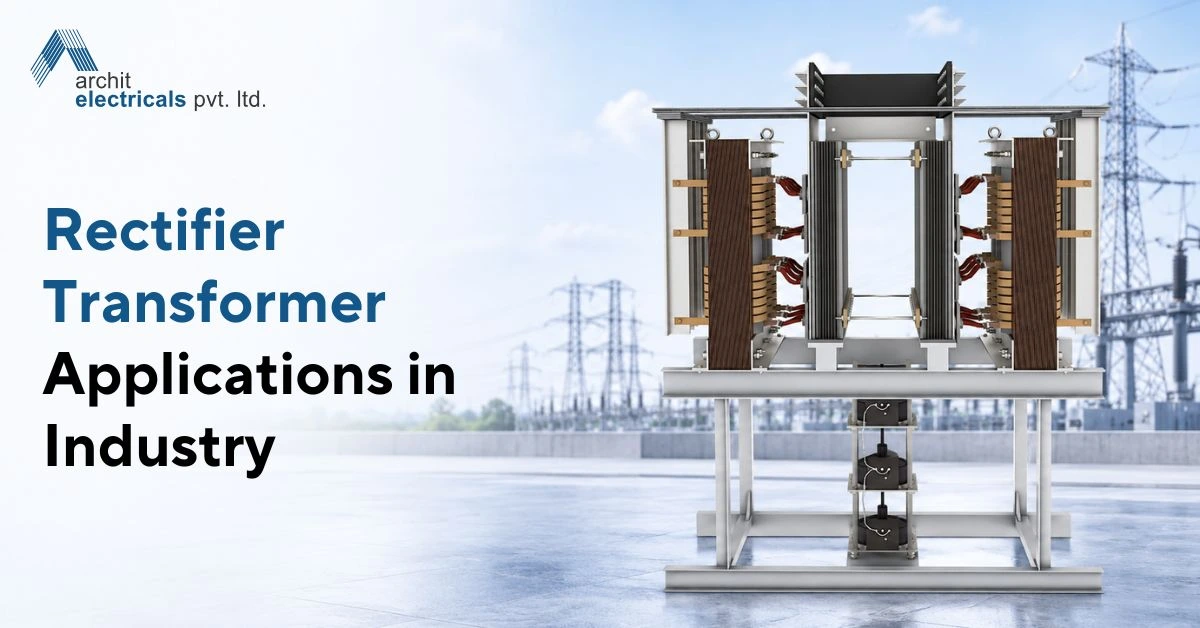
Industrial processes that require a stable direct current (DC) supply often depend on rectifier systems to operate efficiently. A Rectifier Transformer supplies the required electrical power to rectifier circuits, where components such as diodes and thyristors convert alternating current (AC) into DC. These systems are used in applications that need controlled and consistent DC power for production and processing.
Depending on the application, rectifier transformers can be designed for different phase configurations and operating requirements. Six-phase and 12-pulse systems are particularly useful where reduced ripple and smoother DC output are important. Understanding their industrial applications helps businesses identify a suitable transformer configuration for their electrical requirements.
How Does a Rectifier Transformer Support Industrial Processes?
A rectifier transformer works alongside rectifying components to provide the electrical input needed for DC conversion. Its design supports the voltage and phase requirements of the connected rectifier system.
In industrial installations, a Rectifier Transformer may operate with diodes or thyristors, depending on whether the application requires rectification or controlled DC output. Proper configuration can help reduce voltage drop and ripple, supporting more consistent electrical performance.
Major Rectifier Transformer Applications in Industry
1. Industrial Electrochemical Processes
Electrochemical operations require DC power to support reactions involved in manufacturing and material processing. A Rectifier Transformer supplies power to rectifier equipment used in these systems, with its configuration selected according to the process’s electrical requirements.
2. Electroplating and Metal Processing
Electroplating uses electrical current to deposit a metal coating onto a component. Metal-processing operations may also require DC power for specific production stages. A suitable transformer and rectifier arrangement helps deliver the required electrical supply for these applications.
3. Battery Charging Systems
Industrial battery charging installations use DC power to recharge batteries used in equipment, backup systems, and other applications. A Rectifier Transformer can supply the input power for rectifier circuits that convert AC into DC, with the overall system designed to meet the battery system’s voltage and current requirements.
4. Industrial DC Power Supply Systems
Many industrial processes depend on DC power for specialised equipment and power-electronic systems. Rectifier transformers support these installations by supplying power to conversion circuits. The required voltage, current, and operating conditions determine the appropriate system configuration.
5. Power Electronics Systems
Power electronics systems use electronic components to control and convert electrical energy for different industrial applications. A Rectifier Transformer forms part of the power-conversion arrangement by supplying the rectifier circuit. The transformer design must match the connected equipment and the required electrical output.
Need a suitable transformer for industrial DC power conversion? Contact us to discuss your voltage, phase configuration, and application requirements.
Why Are Six-Phase and 12-Pulse Configurations Important?
Phase configuration influences the performance of a rectifier system. Six-phase and 12-pulse arrangements are used in applications where smoother DC output and reduced ripple are important.
A properly designed Rectifier Transformer for these systems can help achieve:
- Reduced output ripple: Supports smoother DC power for suitable industrial processes.
- Lower voltage drops: Helps maintain the required electrical output.
- Reliable operation: Provides power according to the requirements of the connected rectifier system.
- Application-specific performance: Allows the transformer configuration to be matched to industrial operating conditions.
The actual performance depends on the complete rectifier arrangement, transformer design, and operating requirements.
Factors to Consider When Selecting a Rectifier Transformer
Before choosing a Rectifier Transformer, industries should evaluate the following factors:
- Voltage and current requirements: Confirm the electrical input and required DC output of the complete system.
- Phase configuration: Determine whether a six-phase, 12-pulse, or other arrangement is suitable.
- Application type: Consider whether the transformer will support electroplating, battery charging, electrochemical processing, or another industrial process.
- Rectifier components: Check compatibility with the diodes, thyristors, and associated power electronics.
- Operating conditions: Evaluate the process load and expected duty cycle.
- Voltage regulation: Identify whether the application requires additional regulation features.
Selecting a transformer based on these requirements helps ensure compatibility with the rectifier system and its intended industrial use.
Frequently Asked Questions
A Rectifier Transformer supplies power to rectifier circuits that convert AC into DC for industrial processes such as electroplating, battery charging, and electrochemical processing.
They are used in electrochemical processing, metal finishing, electroplating, battery charging, and industrial power-conversion systems.
Six-phase refers to the phase configuration, while 12-pulse describes a rectification arrangement designed to produce smoother DC output with reduced ripple compared with simpler rectifier configurations.
When designed for a suitable multi-phase rectifier arrangement, it supports phase relationships that help reduce ripple in the resulting DC output.
Review the required voltage and current, phase configuration, rectifier components, application, operating conditions, and any voltage regulation requirements.
Conclusion
A Rectifier Transformer is an important part of industrial systems that require AC-to-DC power conversion. Its applications include electrochemical processes, electroplating, metal processing, battery charging, and industrial DC power supplies. Choosing the right phase configuration and matching the transformer to the rectifier system helps support smoother DC output and reliable operation.
12 Pulse Rectifier TransformerPower Rectifier TransformerRectifier Transformer ApplicationsRectifier Transformer Working
Related Posts
Transformers are essential for industrial power distribution, and their reliable operation depends on more than…
Choosing the right transformer for an industrial application requires a clear understanding of its electrical…