15, Jeevan Jyot Society, Opp.Indra Complex, Lalbaug Road, Vadodara-390011
 archit@architelectricals.com
 +91 265-2655380

Transformers are essential for industrial power distribution, and their reliable operation depends on more than…
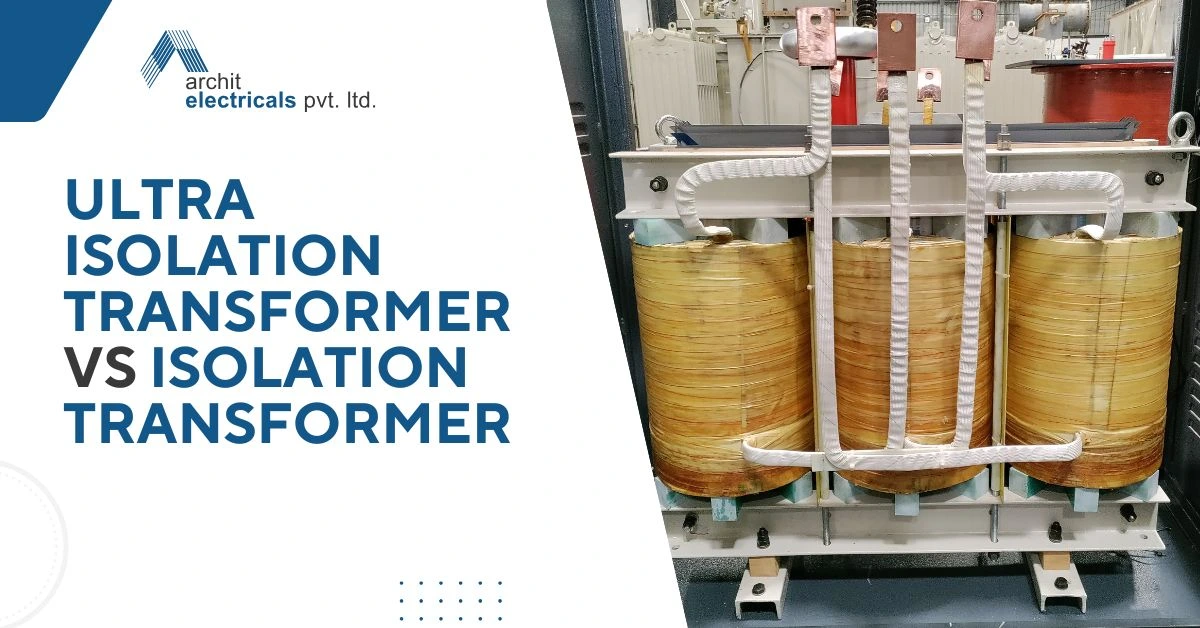
- Product Guide
- 9 minute read
Modern industrial operations depend heavily on stable and reliable electrical systems to maintain productivity, equipment safety, and uninterrupted performance. Electrical disturbances such as voltage fluctuations, electrical noise, harmonics, and grounding issues can affect the efficiency of sensitive systems and create long-term operational challenges. This is why both Ultra Isolation Transformer and Isolation Transformer solutions have become important components in industrial power infrastructure.
Although these transformers are often considered similar because both provide electrical isolation, they are designed for different operational requirements and levels of power protection. An Isolation Transformer mainly focuses on safe power transfer and electrical separation, while an Ultra Isolation Transformer is engineered to deliver superior isolation along with advanced noise reduction and cleaner power quality.
Understanding the differences between an Ultra Isolation Transformer and an Isolation Transformer helps industries choose the right transformer solution for their electrical systems, equipment sensitivity, and operating conditions.
Understanding Electrical Isolation in Power Systems
Electrical isolation is an important requirement in industrial and commercial power systems where safety and equipment protection are critical. Isolation prevents direct electrical connection between circuits while still allowing power transfer through electromagnetic induction.
Electrical isolation helps reduce problems such as:
- Voltage disturbances
- Ground loop issues
- Electrical leakage
- Equipment damage
- Shock hazards
- Power instability
Industrial systems involving automation equipment, communication devices, testing systems, and electronic controls often require stable and isolated power to ensure dependable operation.
Both Isolation Transformer and Ultra Isolation Transformer solutions are developed to support this requirement, although the level of protection and power conditioning differs considerably.
What is Isolation Transformer?
An Isolation Transformer is designed to electrically separate the primary and secondary circuits while maintaining reliable power transfer between them.
The transformer transfers electrical energy magnetically without direct electrical connection between the input and output sides. This separation improves operational safety and helps protect connected equipment from electrical disturbances.
An Isolation Transformer is commonly used where industries require:
- Electrical safety
- Stable voltage transfer
- Ground loop reduction
- Equipment protection
- Reliable power distribution
Most industrial Isolation Transformers are designed using dry type construction and air-cooled systems that support safe indoor installation and dependable operation.
The Isolation Transformer Use extends across industrial facilities, automation systems, laboratories, and commercial electrical systems where dependable power distribution is required.
How Isolation Transformer Works
Understanding How Isolation Transformer Works helps clarify why these transformers are widely used in industrial applications.
An Isolation Transformer operates on electromagnetic induction. Electrical power enters the primary winding and creates a magnetic field inside the transformer core. This magnetic field transfers energy to the secondary winding without direct electrical contact between circuits.
This electrical separation provides several advantages:
- Safer power transfer
- Reduced grounding problems
- Protection against electrical disturbances
- Stable voltage output
- Improved operational safety
Modern Isolation Transformers may also include:
- Dry type air-cooled construction
- High-efficiency transformer cores
- Voltage regulation capability
- VPI processed windings
- Low-loss core design
These features help improve efficiency and long-term performance.
What is Ultra Isolation Transformer?
An Ultra Isolation Transformer is an advanced transformer designed to provide superior electrical isolation along with enhanced power conditioning and noise suppression capability.
While an Isolation Transformer focuses mainly on electrical separation, an Ultra Isolation Transformer is specifically engineered to deliver cleaner and more stable electrical power for sensitive systems.
What is Ultra Isolation Transformer technology designed to achieve? It is intended to minimize common mode noise, electrical interference, and voltage disturbances that may affect high-precision equipment.
An Ultra Isolation Transformer typically includes:
- Isolated windings
- Special magnetic core design
- Shielded enclosure
- Leakage inductance characteristics
- Split winding construction
- Bifilar correction techniques
These design elements help improve power quality and reduce unwanted electrical disturbances.
This makes an Ultra Isolation Transformer highly suitable for applications requiring clean and noise-free power.
How Ultra Isolation Transformer Works
An Ultra Isolation Transformer works using electromagnetic induction similar to an Isolation Transformer, but its internal design provides additional electrical protection and power conditioning.
Power is transferred magnetically between isolated windings while maintaining complete circuit separation. However, an Ultra Isolation Transformer includes engineered shielding and winding design to reduce interference and improve power stability.
These transformers help attenuate:
- Common mode noise
- Electrical spikes
- RF interference
- Static disturbances
- Looping capacitance effects
The shielded construction prevents unwanted electrical noise from reaching sensitive systems.
Because of this capability, Ultra Isolation Transformers are often selected for environments where even small disturbances may affect equipment accuracy or system performance.
Need reliable Ultra Isolation Transformer or Isolation Transformer solutions for industrial power systems? Contact us today for dependable transformer solutions and technical support.
Key Difference Between Ultra Isolation Transformer and Isolation Transformer
Although both transformers provide electrical isolation, their design priorities and operating objectives differ significantly.
The most important difference is that an Isolation Transformer primarily provides safe electrical separation, whereas an Ultra Isolation Transformer combines electrical isolation with advanced power conditioning.
| Comparison Factor | Isolation Transformer | Ultra Isolation Transformer |
| Primary Function | Electrical isolation | Isolation + clean power |
| Noise Reduction | Basic | Advanced |
| RF Interference Control | Limited | High |
| Shielding Design | Standard | Shielded enclosure |
| Power Conditioning | Minimal | Significant |
| Equipment Sensitivity | General systems | Sensitive systems |
| Electrical Protection | Good | Enhanced |
An Isolation Transformer is suitable where stable power transfer and safety are sufficient.
An Ultra Isolation Transformer becomes necessary when power quality and disturbance reduction are critical.
Power Quality and Noise Reduction Comparison
Power quality is one of the major factors that separates an Ultra Isolation Transformer from an Isolation Transformer.
Industrial systems often generate electrical disturbances through:
- Variable frequency drives
- Switching equipment
- Automation systems
- High-frequency devices
- Industrial machinery
- Ground loop conditions
An Isolation Transformer helps reduce some disturbances through electrical separation.
However, an Ultra Isolation Transformer is specifically engineered to suppress electrical noise and provide cleaner power.
The advanced construction of an Ultra Isolation Transformer helps:
- Minimize common mode noise
- Reduce RF interference
- Improve voltage stability
- Protect sensitive electronics
- Support accurate system performance
This additional protection makes a significant difference in precision-based applications.
Safety and Equipment Protection
Electrical safety is a primary reason industry install both Isolation Transformer and Ultra Isolation Transformer systems.
An Isolation Transformer improves safety by preventing direct circuit connection and reducing electrical leakage concerns.
Typical protection benefits include:
- Reduced shock hazards
- Improved grounding safety
- Stable power transfer
- Reduced voltage-related damage
An Ultra Isolation Transformer provides these same benefits while adding stronger protection against electrical interference.
This enhanced protection helps safeguard:
- Sensitive electronics
- Laboratory systems
- Monitoring equipment
- Communication systems
- Industrial controls
Where system sensitivity is high, the additional protection of an Ultra Isolation Transformer becomes highly valuable.
Industrial Applications of Isolation Transformer and Ultra Isolation Transformer
The operating environment usually determines whether an Isolation Transformer or Ultra Isolation Transformer is more suitable.
Isolation Transformer Use is common in:
- Industrial power distribution
- Commercial installations
- Control panels
- Machinery power systems
- Automation equipment
- Electrical infrastructure
These applications mainly require electrical separation and dependable power transfer.
An Ultra Isolation Transformer is commonly used in:
- Laboratories
- Testing facilities
- Communication systems
- Monitoring equipment
- Sensitive automation systems
- Precision electronics
- Instrumentation systems
These environments depend on cleaner and more stable electrical power.
Understanding application requirements helps industries make informed transformer selection decisions.
Choosing Between Ultra Isolation Transformer and Isolation Transformer
Selecting the correct transformer depends on operating conditions and power quality expectations.
An Isolation Transformer is usually preferred when industries require:
- Basic electrical isolation
- Stable voltage transfer
- General power distribution
- Safe indoor installation
An Ultra Isolation Transformer is generally selected when industries need:
- Noise-free power
- High equipment sensitivity protection
- Interference reduction
- Enhanced power conditioning
- Stable and clean electrical performance
Cost should not be the only deciding factor.
Industries comparing transformer systems should consider:
- Equipment sensitivity
- Operating environment
- Electrical disturbance levels
- Long-term reliability
- Power quality requirements
This approach helps ensure better transformer performance and operational efficiency.
Importance of Choosing Reliable Transformer Solutions
Reliable transformer performance depends heavily on engineering quality, manufacturing standards, and design capability.
Poor transformer selection may lead to:
- Voltage instability
- Equipment malfunction
- Reduced efficiency
- Higher maintenance requirements
- Electrical disturbances
High-quality Isolation Transformer and Ultra Isolation Transformer systems are engineered to support long-term performance, operational safety, and dependable power delivery.
Selecting properly designed transformer solutions helps industries maintain reliable and efficient electrical infrastructure.
Frequently Asked Questions
An Isolation Transformer provides electrical separation, while an Ultra Isolation Transformer provides electrical isolation along with advanced noise reduction and cleaner power.
How Isolation Transformer Works is based on electromagnetic induction that transfers power magnetically while maintaining electrical separation between circuits.
It is used in sensitive applications requiring clean power and reduced electrical interference.
Isolation Transformer Use is common in industrial distribution systems, machinery, control panels, and commercial installations.
Yes. Ultra Isolation Transformers are specifically designed for sensitive electronic and precision applications.
An Ultra Isolation Transformer generally provides superior power quality because of its advanced shielding and noise reduction capability.
Conclusion
Both Isolation Transformer and Ultra Isolation Transformer solutions serve important roles in modern industrial power systems, but their applications and performance objectives differ. An Isolation Transformer supports safe electrical separation and reliable power transfer, while an Ultra Isolation Transformer provides enhanced protection through cleaner and more stable power delivery. Understanding these differences allows industries to select transformer systems that match operational requirements, improve equipment protection, and support long-term electrical reliability.
Related Posts
Choosing the right transformer for an industrial application requires a clear understanding of its electrical…
Transformers are essential for reliable power distribution and industrial electrical systems. However, continuous operation can…