15, Jeevan Jyot Society, Opp.Indra Complex, Lalbaug Road, Vadodara-390011
 archit@architelectricals.com
 +91 265-2655380

Transformers are essential for industrial power distribution, and their reliable operation depends on more than…
- Product Guide
- 8 minute read
Selecting the right transformer is essential for ensuring stable electrical performance, equipment protection, and long-term operational reliability in industrial environments. Modern industries increasingly rely on sensitive electronic equipment, automation systems, communication networks, and precision instruments that require a clean and uninterrupted power supply. Even minor electrical disturbances such as voltage fluctuations, common mode noise, or radio frequency interference can affect equipment accuracy and reduce system performance. An Ultra Isolation Transformer is specifically designed to address these challenges by providing superior electrical isolation and delivering clean, stable power to critical applications.
Choosing the appropriate transformer requires more than simply matching voltage ratings. Factors such as electrical isolation capability, noise attenuation, shielding, winding design, application requirements, and overall power quality all influence transformer performance. Understanding these considerations helps engineers and industries select an Ultra Isolation Transformer that supports reliable operation, enhances electrical safety, and improves the overall efficiency of industrial power systems.
Understanding the Role of an Ultra Isolation Transformer
Reliable operation of sensitive electrical equipment depends on maintaining clean and stable power throughout the system. An Ultra Isolation Transformer is designed to electrically isolate the input and output circuits while transferring power efficiently through electromagnetic induction.
Unlike conventional transformers, these specialized transformers provide enhanced protection against electrical disturbances by reducing common mode noise, minimizing voltage fluctuations, and limiting radio frequency interference. Their advanced construction allows connected equipment to receive a cleaner and more stable power supply, reducing the possibility of operational disruptions caused by poor power quality.
These characteristics make Ultra Isolation Transformers suitable for industrial environments where precision, equipment protection, and uninterrupted operation are essential.
Why Choosing the Right Transformer Matters?
Power quality directly influences the performance and reliability of industrial electrical systems. Selecting an appropriate Ultra Isolation Transformer helps ensure that connected equipment operates under stable electrical conditions while remaining protected from disturbances that may affect productivity.
A correctly selected transformer contributes to:
- Improved power quality
- Better voltage stability
- Reduced electrical noise
- Enhanced equipment protection
- Improved operational safety
- Long-term system reliability
An unsuitable transformer may fail to provide adequate isolation or electrical protection, increasing the possibility of equipment malfunction, inaccurate measurements, and unnecessary operational downtime.
Making an informed selection helps industries achieve dependable electrical performance while protecting valuable equipment investments.
Evaluate the Required Application
Every industrial application has different electrical requirements, making application analysis one of the first steps in selecting an Ultra Isolation Transformer. The transformer should be matched to the operating environment and the sensitivity of the connected equipment.
Typical applications include:
- Industrial automation systems
- Laboratory equipment
- Medical equipment
- Communication systems
- Precision testing instruments
- Control panels
- Monitoring systems
- Sensitive electronic equipment
Each application may require different levels of electrical isolation, shielding, and noise suppression.
Selecting a transformer based on actual operational requirements helps improve long-term performance while avoiding unnecessary system limitations.
Consider Electrical Isolation Performance
Electrical isolation is one of the primary reasons industries install an Ultra Isolation Transformer. The transformer separates the primary and secondary circuits, reducing the transfer of unwanted electrical disturbances between the input and output sides.
Effective electrical isolation helps:
- Improve electrical safety
- Reduce common mode noise
- Minimize current loops
- Protect sensitive equipment
- Improve system reliability
Applications involving precision electronics often benefit significantly from higher levels of electrical isolation because stable power directly influences equipment accuracy and operational consistency.
Evaluate Noise Reduction Capability
Electrical noise is one of the most common causes of equipment instability in modern industrial systems.
Advanced engineering enables an Ultra Isolation Transformer to reduce electrical disturbances before they reach connected equipment.
Important sources of interference include:
- Common mode noise
- Radio frequency interference
- Static electrical charges
- Electromagnetic disturbances
Noise reduction improves:
- Equipment stability
- Measurement accuracy
- Signal integrity
- Automation reliability
- Communication system performance
Choosing a transformer designed for effective noise attenuation helps improve the overall quality of industrial electrical systems.
Assess the Transformer Design
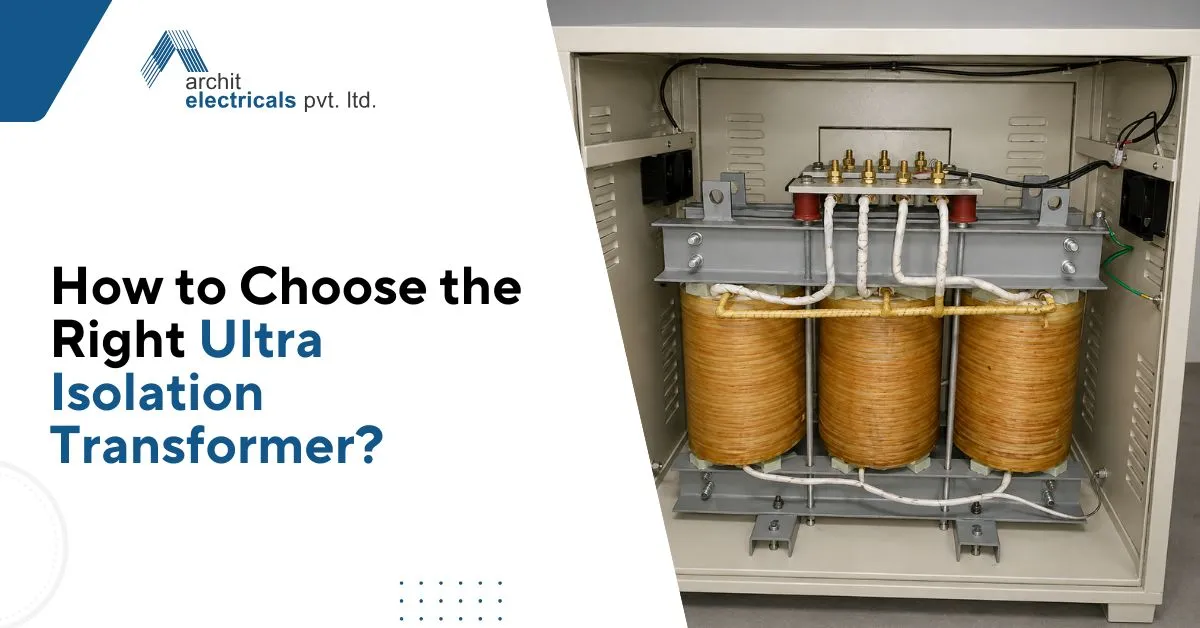
The internal construction of a transformer has a direct influence on electrical performance and long-term reliability. An Ultra Isolation Transformer incorporates several specialized design features that distinguish it from conventional transformers.
Important design characteristics include:
- Isolated primary and secondary windings
- Neutral and ground connections
- Split winding construction
- Bifilar correction techniques
- Fully shielded enclosure
- Special magnetic core with leakage inductance
Each of these features contributes to improved electrical isolation, better noise attenuation, enhanced operational safety, and more reliable power delivery.
Evaluating transformer construction helps industries select equipment capable of supporting demanding industrial applications.
Importance of Shielding and Winding Technology
Electrical shielding plays an important role in maintaining clean power for sensitive equipment.
A properly engineered Ultra Isolation Transformer incorporates shielding techniques that reduce electronic noise, minimize static charges, and limit radio frequency interference before it reaches connected systems.
Split winding construction combined with bifilar correction helps reduce looping capacitance within the transformer.
These engineering features contribute to:
- Improved power quality
- Better electrical insulation
- Enhanced equipment protection
- Reduced electrical interference
- Stable voltage delivery
For industries operating precision instruments or automation equipment, effective shielding can significantly improve system reliability.
Need a reliable Ultra Isolation Transformer? Contact Us today for dependable industrial transformer solutions.
Consider Future Operational Requirements
Selecting a transformer should involve not only current operating conditions but also future expansion plans.
Industrial facilities often expand production capacity or integrate additional automation systems over time. An Ultra Isolation Transformer that aligns with both present and future requirements can provide greater operational flexibility and reduce the need for premature equipment replacement.
When planning for future needs, industries should consider:
- Expected equipment expansion
- Additional electrical loads
- Changes in operating conditions
- Future automation requirements
- Long-term reliability objectives
Taking these factors into account helps ensure that the selected transformer continues to support stable electrical performance as operational demands evolve.
Common Mistakes to Avoid During Selection
Selecting the right transformer requires evaluating both technical specifications and application requirements. An Ultra Isolation Transformer delivers the best performance only when it is matched correctly to the intended operating environment. Overlooking critical selection factors may reduce power quality, limit equipment protection, and affect long-term system reliability.
Some common mistakes include:
- Selecting a transformer based only on voltage rating
- Ignoring electrical noise levels within the installation
- Overlooking shielding and winding design
- Not evaluating future load requirements
- Choosing inadequate isolation performance
- Ignoring environmental operating conditions
Avoiding these mistakes helps industries improve electrical safety while ensuring dependable operation of sensitive equipment.
Selection Checklist for an Ultra Isolation Transformer
Before finalizing a transformer, industries should evaluate the following factors to ensure the selected equipment matches operational requirements.
| Selection Factor | Why It Is Important |
| Electrical isolation performance | Improves equipment protection |
| Noise attenuation capability | Reduces common mode noise and interference |
| Shielding quality | Minimizes RF interference and static charges |
| Winding construction | Supports reliable electrical performance |
| Power quality requirements | Ensures stable voltage delivery |
| Application suitability | Matches operational requirements |
| Future expansion capability | Supports long-term operational flexibility |
| Overall reliability | Improves equipment life and system stability |
Reviewing these factors before installation helps industries select a transformer capable of supporting dependable long-term performance.
Supporting Long-Term System Reliability
Long-term electrical reliability depends on selecting equipment that consistently delivers clean and stable power under changing operating conditions. An Ultra Isolation Transformer supports this objective by combining effective electrical isolation, advanced shielding, and reliable voltage stability to protect sensitive industrial equipment.
Reliable long-term performance can be achieved through:
- Proper application assessment
- Suitable transformer selection
- Routine performance evaluation
- Stable operating conditions
- Periodic electrical inspections
- Preventive maintenance
Following these practices helps maintain power quality, reduce operational interruptions, and improve equipment reliability throughout the transformer’s service life.
Frequently Asked Questions
Choosing the right transformer helps improve power quality, reduce electrical noise, protect sensitive equipment, and support reliable industrial operation.
These transformers are widely used in industrial automation systems, laboratories, medical equipment, communication systems, precision testing equipment, and control panels.
Important factors include electrical isolation performance, shielding quality, winding design, noise reduction capability, application requirements, and future operational needs.
It isolates the input and output circuits while reducing common mode noise, voltage fluctuations, RF interference, and electrical disturbances.
Shielding helps block electronic noise, minimize static charges, reduce radio frequency interference, and protect sensitive electrical equipment.
Conclusion
Reliable industrial power systems require clean electrical supply, effective isolation, and dependable equipment protection. An Ultra Isolation Transformer provides these capabilities through advanced winding construction, superior shielding, stable voltage isolation, and efficient noise attenuation. Selecting the appropriate transformer by evaluating application requirements, electrical isolation performance, shielding quality, and future operational needs helps industries achieve improved power quality, enhanced equipment protection, and long-term operational reliability. A well-chosen transformer becomes an essential part of maintaining safe, stable, and efficient electrical systems across demanding industrial environments.
How Isolation Transformer WorksIsolation Transformer AdvantagesIsolation Transformer UseWhat is Ultra Isolation Transformer
Related Posts
Choosing the right transformer for an industrial application requires a clear understanding of its electrical…
Transformers are essential for reliable power distribution and industrial electrical systems. However, continuous operation can…